
Specialized Transport for Valuable Instruments
Piano Moving in Batavia for upright and grand pianos requiring careful relocation
Pianos weigh hundreds of pounds, contain fragile internal components, and feature finishes that scratch easily when contacted by straps or rough surfaces during transport. Piano moving in Batavia involves specialized equipment and techniques unavailable to general movers—piano dollies with rubber wheels, padding designed specifically for instrument finishes, and lifting methods that distribute weight without stressing the piano's frame or legs. MovePlus Cincinnati LLC handles upright and grand pianos with professional attention to delicate finishes, internal mechanisms, and careful placement in new locations, recognizing that these instruments represent both financial investment and sentimental value for families. Navigating stairs and narrow hallways requires planning that accounts for piano dimensions and doorway clearances before the move begins.
The service addresses risks that standard furniture moving doesn't accommodate, including damage to piano legs during lifting, finish scratches from improperly placed padding, and internal component disruption caused by tilting the instrument at incorrect angles. Safe transportation preserves tuning stability and structural integrity, though professional tuning is typically recommended after any move regardless of handling quality.
Request a piano moving estimate to evaluate access points and establish a timeline for your instrument relocation.
How Piano Transportation Protects Delicate Components
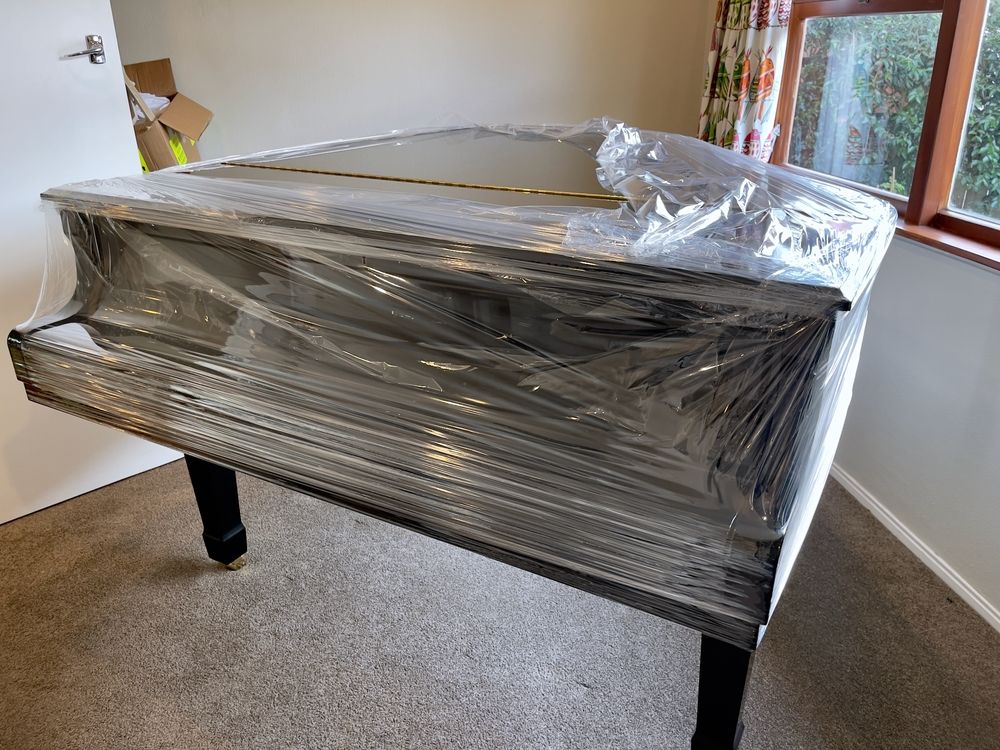
Specialized moving equipment includes piano dollies with wide, soft-rubber wheels that distribute weight evenly and roll smoothly over thresholds without jarring the instrument. Thick padding wraps the piano's body, legs, and lid, with extra layers placed at corners and edges where contact with doorways is most likely. Grand pianos require leg removal and board placement underneath before lifting onto dollies, while upright pianos are tilted carefully onto dollies with the weight balanced over the wheels rather than hanging off one side.
After the move, you'll notice your piano positioned exactly where it fits best acoustically and visually, with no scratches on the finish and no gouges in your flooring from dragging or improper dolly use. The instrument remains structurally sound, with legs reattached securely and no visible damage to the keyboard, pedals, or exterior wood. Professional handling reduces the likelihood of tuning drift, though temperature and humidity changes between locations often require tuning adjustments within weeks of the move regardless of transport quality.
Experience navigating stairs involves measuring stairway width, landing space, and ceiling height before attempting to move the piano, ensuring that turns and inclines can be managed without tilting the instrument beyond safe angles. Narrow spaces such as hallways in older homes require disassembly of door casings or temporary hinge pin removal to widen openings enough for piano clearance. Careful positioning in the new location accounts for floor stability, proximity to heating vents, and humidity levels that affect tuning and wood condition over time.
What Property Owners Usually Ask
Homeowners relocating pianos in Batavia and surrounding communities often ask about equipment, timing, and what preparation is needed before movers arrive.
What's the difference between moving an upright piano and a grand piano?
Upright pianos remain assembled and are tilted onto specialized dollies for transport, while grand pianos require leg removal, careful lowering onto piano boards, and reassembly after placement. Grand pianos are heavier and require larger crews and more time due to disassembly steps.
How are piano finishes protected during the move?
Heavy padding designed specifically for pianos wraps the entire instrument, with extra layers placed at corners and along edges. Straps are positioned over padding rather than directly against the wood, preventing pressure marks and scratches on glossy or satin finishes.
What happens if the piano won't fit through a doorway?
Measurements taken during the estimate identify potential clearance issues before moving day. If necessary, door casings can be temporarily removed or hinge pins pulled to widen openings. In rare cases, windows or patio doors provide alternative access when interior doorways are too narrow.
When should a piano be tuned after moving?
Most piano technicians recommend waiting two to four weeks after a move to allow the instrument to acclimate to new temperature and humidity conditions before tuning. Moving itself can cause minor tuning drift, but environmental changes between homes often have a larger impact on string tension and pitch stability.
How many movers are required for piano relocation?
Upright pianos typically require two to three movers depending on weight and stair access, while grand pianos often need three to four movers due to disassembly requirements and size. Crew size is determined during the estimate based on piano type, weight, and access challenges at both pickup and delivery locations.
MovePlus Cincinnati LLC provides piano moving services with specialized equipment and techniques for upright and grand instruments throughout Batavia and nearby areas. Schedule your piano moving estimate to confirm access points and crew requirements for your instrument relocation.